
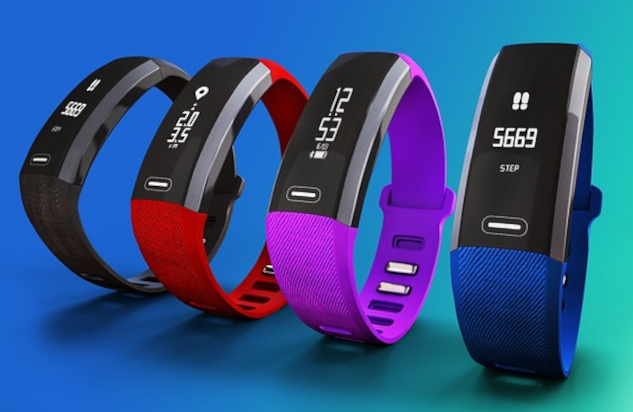
Image by Eliza Lake.
In This Article:
- Is a fitness tracker right for your lifestyle?
- What are the health benefits of tracking your activity?
- When does health tracking go too far?
- Who might be harmed by using these devices?
- How to use tracking tools in a healthy, balanced way
Why Use a Fitness Tracker — and When You Shouldn't
by Beth McDaniel, InnerSelf.comThere’s something oddly satisfying about seeing your step count tick upward throughout the day. It’s a modern kind of gold star, a grown-up version of a sticker chart. Fitness trackers offer that immediate feedback loop we’re wired to love. You walk, it tracks. You sleep, it monitors. You breathe—yes, some even notice that too.
And let’s be honest, who doesn’t need a little nudge now and then? On days when motivation dips, your fitness tracker can whisper, “Just 1,000 more steps.” It’s not magic—it’s psychology. Visualizing your progress can make the abstract (like health goals) feel tangible. That’s no small thing in a world full of distractions and obligations.
How Health Tracking Helps You Stay Accountable
If you’ve ever promised yourself you’d start taking your health seriously “next Monday,” you know how slippery self-accountability can be. A fitness tracker becomes a kind of personal coach—quiet, data-driven, and almost always consistent. Whether you're tracking your heart rate, sleep quality, or number of active minutes, it helps make invisible patterns visible.
Over time, these patterns can lead to profound insights. Maybe you notice you sleep better on days you skip alcohol. Or that your stress levels spike every Tuesday afternoon. The value lies not in the numbers themselves but in what those numbers reveal about your habits—and how they make you feel.
Used wisely, a tracker can foster mindfulness. It prompts you to check in with yourself throughout the day. Are you moving enough? Hydrated? Rested? Suddenly, you're not guessing—you’re responding to your body with clarity.

The Danger of Becoming Obsessed with Data
But there’s a darker side to all this tracking. For some, what begins as motivation turns into obsession. Numbers stop being helpful and start dictating worth. Didn’t hit your 10,000 steps today? Cue guilt. Slept poorly? Now your whole day feels like a failure before it even starts.
The trouble is that trackers don’t always account for context. They don't know you spent the day caring for a sick child or that your body needed rest more than steps. When the data becomes the goal instead of the guide, the balance tips into harm.
It’s even more complicated for those with a history of disordered eating or anxiety. Constant feedback can exacerbate compulsive behaviors or negative self-talk. In these cases, a health tracker doesn’t just fail—it can actively cause distress.
Who Should Think Twice About Fitness Trackers
If you find yourself feeling more judged than supported by your tracker, it might be time for a break. Likewise, if you’re ignoring your body’s signals in favor of chasing numbers—pushing through pain, skipping rest, or equating worth with step counts—your relationship with your tracker needs rethinking.
Teens and young adults are also particularly vulnerable. At a time when identity is still forming, a device that quietly rates your every move can plant harmful seeds. And for anyone recovering from an injury or illness, fitness trackers can create unrealistic expectations during a time that calls for compassion, not comparison.
Mindful Tracking
So, how do you reap the benefits of tracking without falling into the trap? Start by checking in with your intention. Are you using the tracker to support your well-being—or to punish yourself for not being “better”? There’s a world of difference.
Set flexible goals. Maybe today you aim for 6,000 steps instead of 10,000 because your body is sore or your schedule is tight. Celebrate the effort, not just the outcome. And remember: rest is a vital part of health. If your tracker doesn’t cheer you on for sleeping in or stretching gently, that’s not your failure—it’s the device’s limitation.
Another tip: take regular tech breaks. Leave the tracker off for a day or two and notice how you feel. Are you more in tune with your body—or more anxious? Use that feedback to decide how and when the tool serves you best.
Reclaiming Your Inner Compass
We live in an age where data is abundant but wisdom feels scarce. Fitness trackers can offer useful cues, but they should never replace your inner compass. No device can tell you how much joy you felt during a dance class or how deeply you connected with your partner on a morning walk.
Ultimately, health isn’t just about numbers—it’s about aliveness. It’s about feeling strong enough to carry groceries, laugh with your kids, or chase a dream. If a tracker helps you live that life more fully, wonderful. But if it starts to narrow your world to stats and streaks, it may be time to look up from your wrist—and back into your heart.
Let your body, not your gadget, be the authority on how you feel. That’s where true wellness begins.
And if you ever need permission to unplug, to trust your instincts, or to rest without guilt—consider this it.
Your well-being doesn’t need to be measured to be real. It only needs to be honored.
So breathe. Walk. Stretch. Smile. Whether your device is on or off, your body is listening.
And that’s the tracker that truly matters.
About the Author
Beth McDaniel is a staff writer for InnerSelf.com
Books on Fitness and Exercise from Amazon's Best Sellers list
The Four-Pack Revolution: How You Can Aim Lower, Cheat on Your Diet, and Still Lose Weight and Keep It Off
by Chael Sonnen and Ryan Parsons
The Four-Pack Revolution presents a total-life approach for attaining health and fitness goals without the hard work and suffering.
Click for more info or to order
Bigger Leaner Stronger: The Simple Science of Building the Ultimate Male Body
by Michael Matthews
If you want to build muscle, lose fat, and look great as quickly as possible without steroids, good genetics, or wasting ridiculous amounts of time in the gym and money on supplements, then you want to read this book.
Click for more info or to order
The Women's Health Big Book of Exercises: Four Weeks to a Leaner, Sexier, Healthier You!
by Adam Campbell
The Women's Health Big Book of Exercises is the essential workout guide for anyone who wants a better body. As the most comprehensive collection of exercises ever created, this book is a body-shaping power tool for both beginners and longtime fitness buffs alike.
Click for more info or to order
Bodyweight Strength Training Anatomy
by Bret Contreras
In Bodyweight Strength Training Anatomy, author and renowned trainer Bret Contreras has created the authoritative resource for increasing total-body strength without the need for free weights, fitness machines, or even a gym.
Click for more info or to order
The Men's Health Big Book of Exercises: Four Weeks to a Leaner, Stronger, More Muscular You!
by Adam Campbell
The Men's Health Big Book of Exercises is the essential workout guide for anyone who wants a better body. As the most comprehensive collection of exercises ever created, this book is a body-shaping power tool for both beginners and longtime fitness buffs alike.
Click for more info or to order
Article Recap
Fitness trackers can improve motivation, offer insights, and support healthier habits. But they’re not for everyone. When tracking causes stress or obsessive behavior, it’s time to reassess. The key is balance: use health tracking tools mindfully and let your inner signals lead the way. That’s the real path to well-being.
#FitnessTracker #HealthTracking #MindfulWellness #HealthyHabits #InnerSelfcom